

 |


|

|
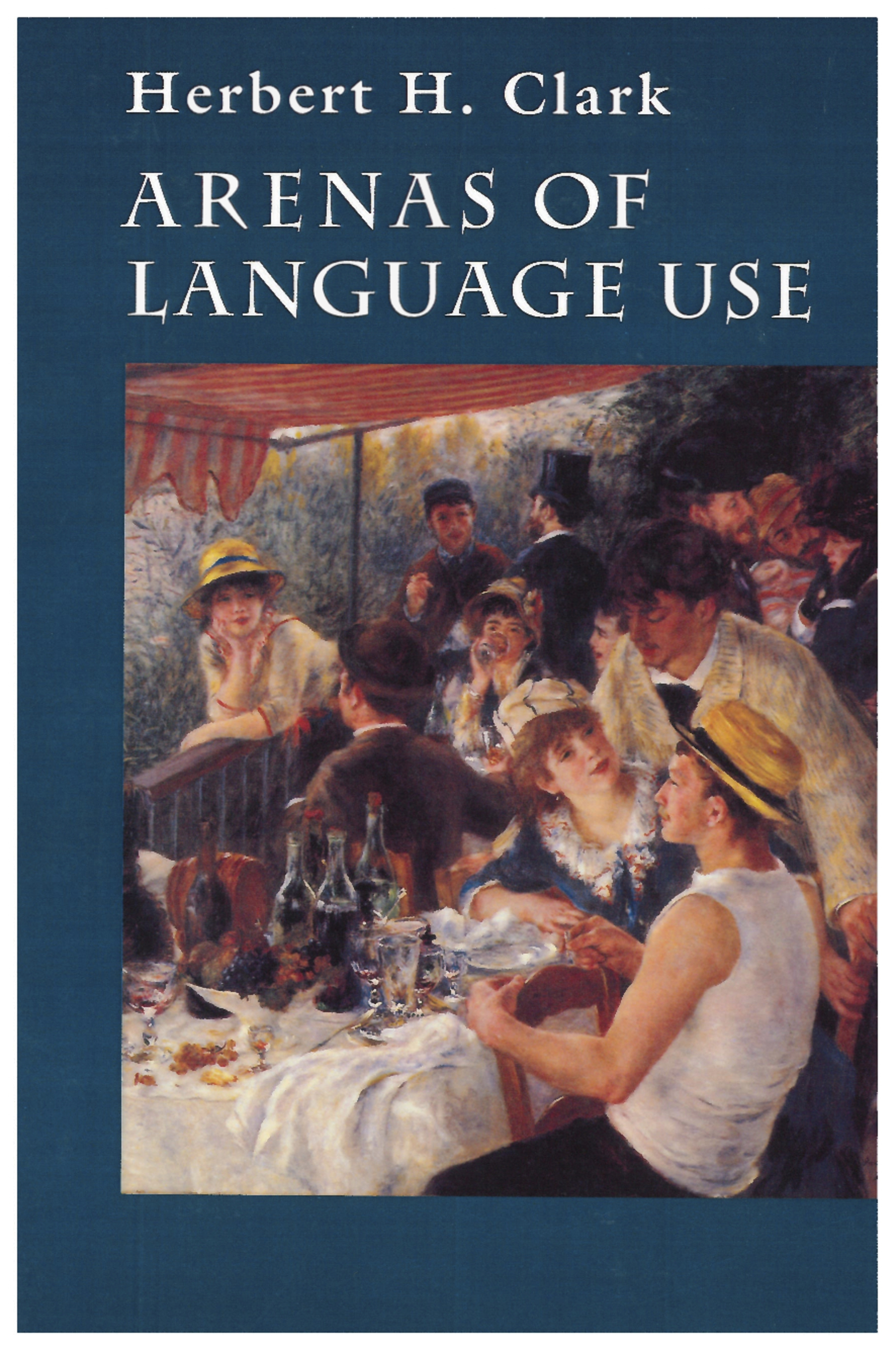
Arenas of Language UseWhen we think of the ways we use language, we think of face-to-face conversations, telephone conversations, reading and writing, and even talking to oneself. These are arenas of language use—theaters of action in which people do things with language. But what exactly are they doing with language? What are their goals and intentions? By what processes do they achieve these goals? In these twelve essays, Herbert H. Clark and his colleagues discuss the collective nature of language—the ways in which people coordinate with each other to determine the meaning of what they say. According to Clark, in order for one person to understand another, there must be a “common ground” of knowledge between them. He shows how people infer this “common ground” from their past conversations, their immediate surroundings, and their shared cultural background. Clark also discusses the means by which speakers design their utterances for particular audiences and coordinate their use of language with other participants in a language arena. He argues that language use in conversation is a collaborative process, where speaker and listener work together to establish that the listener understands the speaker's meaning. Since people often use words to mean something quite different from the dictionary definitions of those words, Clark offers a realistic perspective on how speakers and listeners coordinate on the meanings of words. This collection presents outstanding examples of Clark's pioneering work on the pragmatics of language use and it will interest psychologists, linguists, computer scientists, and philosophers. is professor in the Department of Psychology at Stanford University and coauthor, with , of Psychology of Language: An Introduction to Psycholinguistics. Contents
Part I Common Ground and Language UsePart II Discourse as a Collaborative ProcessPart III Audience Design in Language UsePart IV Coordination of MeaningThis title is available through our copublisher, The University of Chicago Press. Please contact them for ordering information. 11/1/92 ISBN (Paperback): 0226107825 (9780226107820)
Subject: Linguistics; Pragmatics; Sociolinguistics |


 Distributed by the
University of Chicago Press |
|
pubs @ csli.stanford.edu
|
CSLI Publications
Stanford University Cordura Hall 210 Panama Street Stanford, CA 94305-4101 (650) 723-1839 |