

 |


|

|
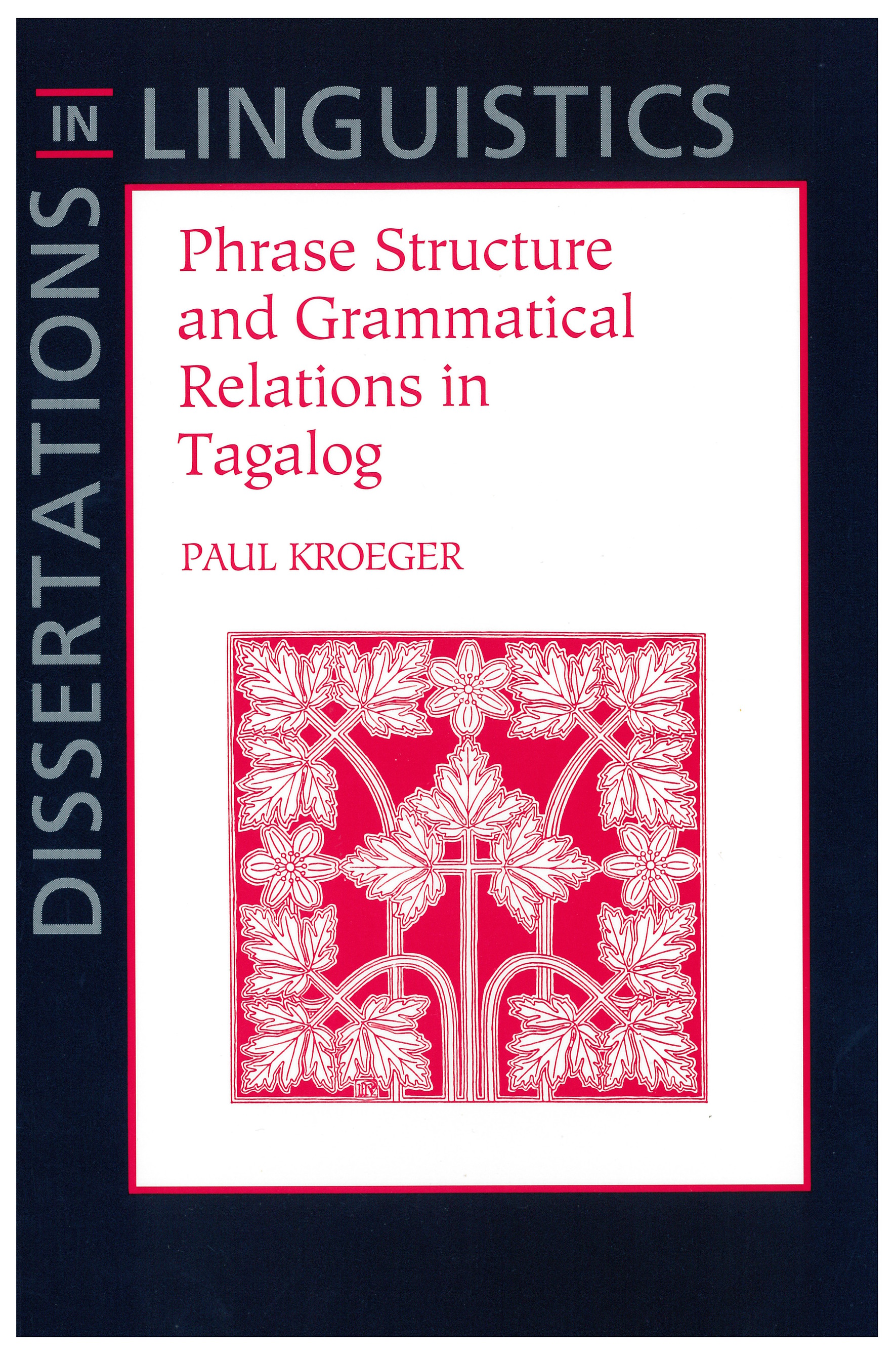
Phrase Structure and Grammatical Relations in TagalogOver the last twenty years or so, most of the work on the syntax of Philippine languages has been focused on the question of whether or not these languages can be said to have grammatical subjects, and if so which argument of a basic transitive clause should be analyzed as being the subject. Paul Kroeger's contribution to this debate asserts that the grammatical relations such as subject and object are syntactic notions, and must be identified on the basis of syntactic properties, rather than by semantic roles or discourse functions. A large number of syntactic processes in Tagalog uniquely select the argument which bears the nominative case. On the other hand, the data which has been used in the debate to assert the ambiguity of subjecthood is best analyzed in terms of semantic rather than syntactic constraints. Together these facts support an analysis that takes the nominative argument as the subject. Kroeger examines the history of the subjecthood debate and uses data from Tagalog to test the theories that have been put forth. His conclusions entail consequences for certain linguistic concepts and theories, and lead Kroeger to assert that grammatical relations are not defined in terms of surface phrase structure configurations, contrary to the assumptions of many approaches to syntax including the Government-Binding theory. was doing fieldwork in Austronesian langauges and teaching linguistics to fieldworkers from around the world at the time of this publication. Contents
12/1/92 ISBN (Paperback): 9780937073865 (0937073865)
|


 Distributed by the
University of Chicago Press |
|
pubs @ csli.stanford.edu
|
CSLI Publications
Stanford University Cordura Hall 210 Panama Street Stanford, CA 94305-4101 (650) 723-1839 |